7 Reasons Why You Need an Emergency Tree Service in Oregon
If you’re asking, “Why do you need an emergency tree service in Oregon?” the answer usually comes down to sudden changes you can see after severe weather. A large Douglas fir, maple, or oak may develop a hanging limb, fresh crack, or new lean near a roof, driveway, or other part of the property.
The hard part is knowing what the damage actually means. A storm-damaged tree does not always need to come down, but broken limbs, trunk damage, or a sudden lean are worth taking seriously. The first goal is to understand what needs attention now, what can wait, and whether pruning, cleanup, or removal makes the most sense.
1. A Broken Limb Can Stay Dangerous After a Storm in Oregon
A storm may be over while the tree damage is still developing. Large branches can break without falling all the way to the ground, leaving damaged wood caught in the canopy. That is one reason we tell people to look up from a safe distance before walking or parking beneath a storm-damaged tree.
The City of Eugene’s storm safety guidance warns that hazardous hanging branches can remain in trees well after a storm has passed.
You may notice signs like:
- A branch hanging lower than it did before
- Fresh broken wood high in the canopy
- A large limb caught in another branch
- New debris beneath a mature tree
The important part is not trying to decide from directly underneath the damage.
2. A Sudden Lean Can Tell You Something Changed
A tree that suddenly looks different after wind, ice, or another storm deserves a closer look. A new lean is different from a tree that has grown at an angle for years. The concern is the change itself, especially when the tree stands near a house, driveway, walkway, or parked vehicle.
From the ground, you may notice more than the trunk angle. Soil lifting near the base or an exposed root area can also tell you that something moved.
What Can You Safely Check From a Distance?
Look for visible changes rather than trying to test the tree yourself:
- Compare the tree with how it looked before the storm
- Check whether soil has lifted around the base
- Keep people and vehicles away from the direction of the lean
A visual check can tell you that something changed. It cannot tell you how stable the tree is.
3. Fresh Trunk Cracks Can Change the Decision
A fresh split or crack in the trunk deserves more attention than scattered twigs on the lawn. Trunk damage can affect the main structure of the tree, so the question becomes more than “Can we clean this up?” The better question is how much of the tree was affected and whether it can reasonably remain.
OSU Extension’s storm-damage guidance recommends taking a closer look at storm-damaged trees before making a quick decision about removal. A broken branch, a split trunk, and major crown damage can all point to different next steps.
A useful distinction: Broken branches may affect one part of the canopy. A major trunk split involves the central structure supporting the tree.
That still does not mean removal is automatic. It means the damage deserves a closer look.
4. Storm-Damaged Wood Can Move When You Start Cutting
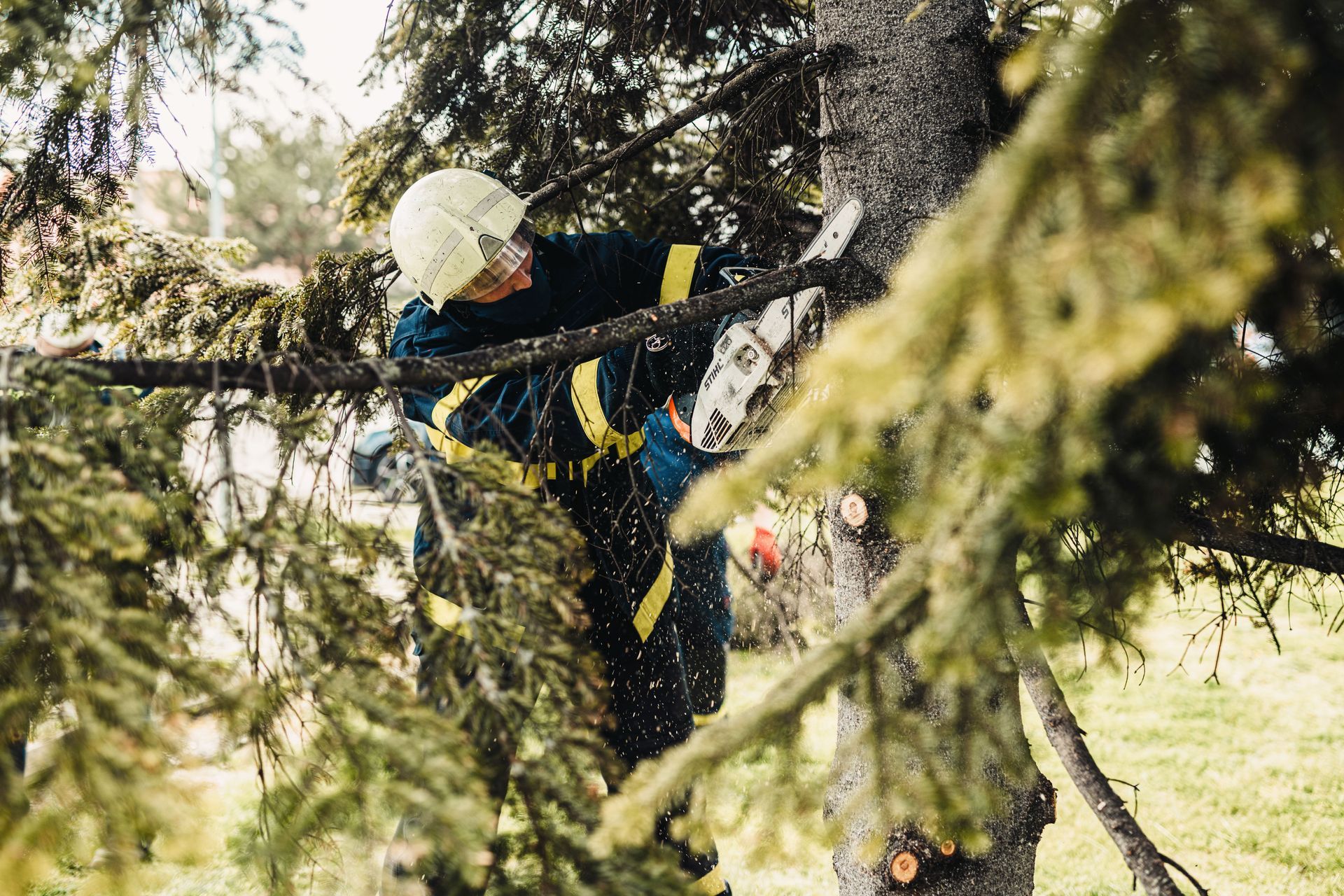
Storm-damaged trees can be dangerous to cut because bent, twisted, or hung-up wood may still be under tension after the weather clears. During Eugene’s January 2024 ice storm, more than 1,000 City street trees were damaged or destroyed. That gives you an idea of how much tree damage a single storm can leave behind.
Storm-damaged wood can still hold tension even when it looks settled. The CDC’s chainsaw safety guidance flags several risky storm-cleanup situations, including:
- Bent or twisted branches
- Hung-up limbs
- Trees resting against other trees
- Wood that may spring back when cut
If you cannot tell how the wood is being held in place, it is safer to leave the cutting alone.
5. Damage Above a House or Vehicle Changes the Stakes
A broken branch becomes a different problem when there is a roof, car, driveway, fence, or regularly used area below it. In our tree work, concerns about branches near houses and vehicles come up often. People usually want to know whether the branch can be pruned back or whether something larger is going on.
Before focusing on the tree itself, look at what sits beneath the damaged area.
| What Is Below The Tree? | Why It Matters |
|---|---|
| Roof | A falling limb could strike the structure |
| Driveway | Vehicles and people may regularly pass below |
| Walkway | The area may be difficult to avoid |
| Open yard | It may be easier to keep people away |
Creating distance buys you time to make a calmer decision.
6. Power Lines Require a Different First Call
If a damaged tree or branch is touching a power line, tree cleanup is not the first step. EWEB’s downed power line guidance says to treat every downed line as energized because nearby trees, fences, vehicles, and standing water may also carry electricity.
If a power line is involved:
- Stay at least 50 feet away
- Keep other people away
- Call 911 to report a downed line, then notify EWEB
Never try to move the branch or line yourself.
7. Emergency Tree Service Does Not Always Mean Removal
An urgent tree problem does not always mean the whole tree needs to come down. The right next step may be removing a failed limb, clearing storm debris, pruning damaged growth, or discussing removal when the tree’s structure has been seriously affected.
We often hear the same question: “Is this tree safe?” The answer should come from looking at the tree and the property, not from assuming the biggest job is the right one.
What changed? → What is at risk? → What actually needs to be done?
That simple framework helps guide the next step. Depending on the damage, follow-up work may involve different tree care options, including pruning, storm cleanup, or tree removal.
Get Clear Answers About Emergency Tree Care in Oregon
The hardest part of sudden tree damage is knowing what it actually means. A broken limb may need pruning, a fallen tree may need cleanup, and more serious structural damage may lead to a conversation about removal. Each situation deserves its own answer.
At
Wild Geese Tree Care, we stay involved from the first look through the finished work. We handle storm damage, hazardous trees, pruning, technical removals, and cleanup without pushing work you do not need. If you are still asking, “Why do you need an emergency tree service?” we can help you sort through the next step.
Frequently Asked Questions
Does a broken branch mean the whole tree needs to be removed?
No. A broken branch does not automatically mean the whole tree needs to come down. The decision depends on where the branch failed, whether the trunk was affected, and what sits below the tree. We can look at the whole situation and explain whether pruning, hazard reduction, or removal makes more sense.
What tree damage should I treat as urgent?
Tree damage deserves faster attention when people or property are exposed. Watch for:
- A large hanging limb
- A new lean
- Fresh trunk cracking
- Root movement
- A fallen tree blocking access
- Any tree involving a power line
Keep away from the affected area until the hazard is understood.
Can I cut up a storm-damaged tree myself?
Small, loose branches on the ground may be manageable, but larger storm damage can be harder to judge. OSU Extension’s chainsaw safety guidance recommends extra caution around damaged trees and difficult cutting situations. If you are not sure where to start safely, call us before you begin.
Who should I call if a tree is touching a power line?
Keep your distance from the tree, branch, and line. If the line is down, EWEB says to stay at least 50 feet away, call 911, and report it to EWEB. If a tree is near an overhead line that is still up, contact EWEB before tree work begins.
What happens after the immediate tree hazard is handled?
The rest of the tree may still need attention. That could mean checking damaged branches, clearance, or whether removal makes sense. Our tree care services include pruning, tree removal, and storm cleanup based on what the property actually needs.